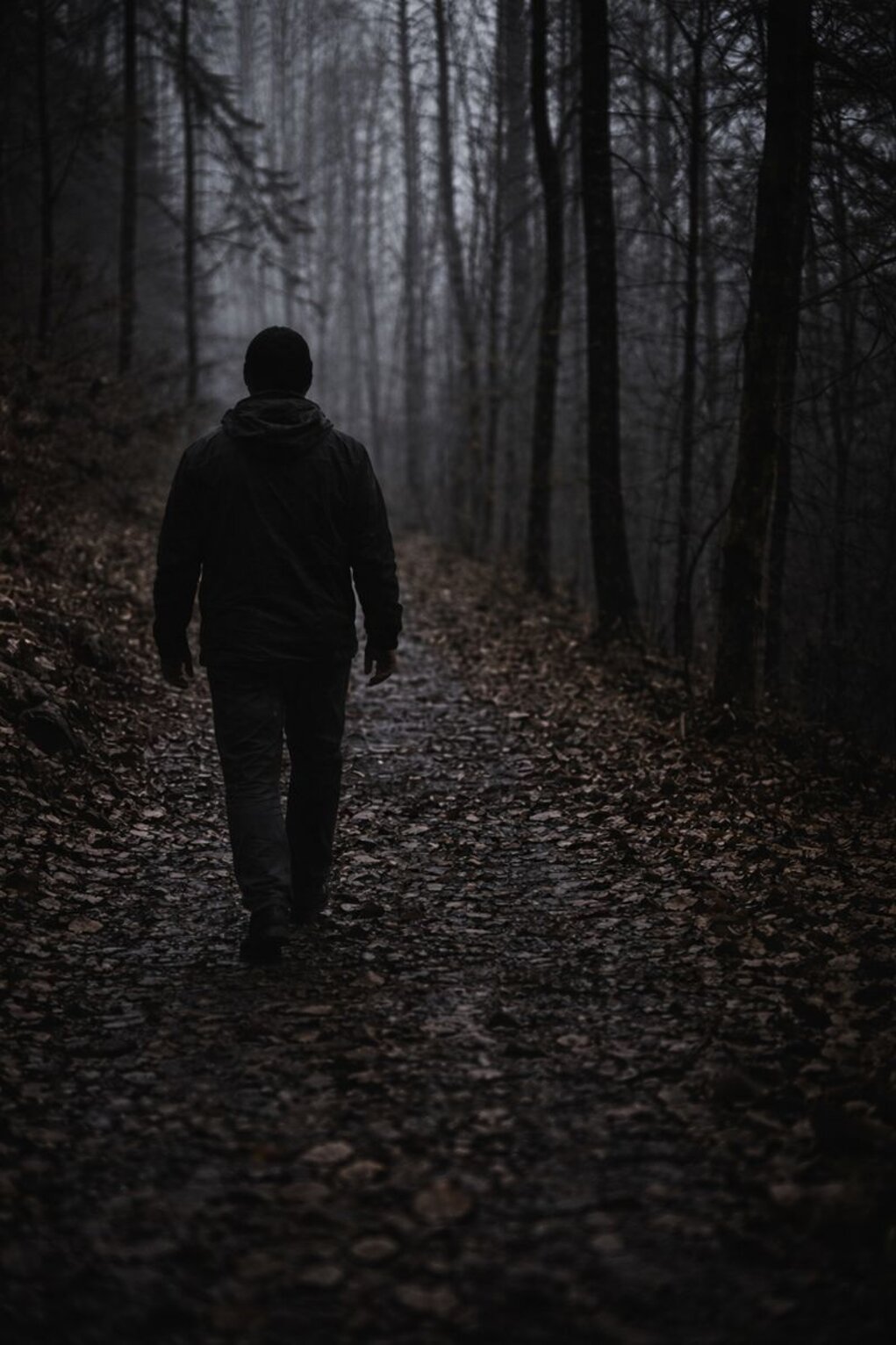
The video for BOSC (The wood) is still held back, for now.
GORKI

GORKI
ABOUT
Gorki is a songwriter of Russian origin. He arrived in Friuli many years ago,
at a time when life still allowed room to change direction.
There, he found a second home among the mountains, choosing a quiet
and almost isolated way of living, following the rhythm of the seasons.
Friuli is a land in north-eastern Italy, between the mountains and the sea,
where people still speak an ancient Neo-Latin language that has survived
through everyday use and oral tradition. It is in this land that Gorki decided to stay.
He learned Friulian from his maternal grandmother. A language first heard before
being fully understood, carried in memory before becoming conscious choice.
Over time, it became the most natural way for him to sing what does not fade away.
Not a studied language, but a lived one — chosen to give voice to what remains.
His songs are born slowly. They are short stories made of memories, inner landscapes,
and simple lives. The lyrics are essential, rooted in a past world that continues to resurface through small gestures, silences, and fragments of remembrance.
They do not seek the present moment, but something that endures beyond time.
For a long time, Gorki played only for himself — in mountain houses, in the woods,
by a fire or near an open window. The songs were not meant to be heard, but simply to exist.
He was discovered by chance, through an unexpected encounter with someone who, hearing him play, recognized that those songs carried something worth preserving and sharing.
From that meeting, a friendship was born, and from that friendship came
the decision to make his music public.
Each song is also an image. Through music and video, Gorki builds small,
melancholic stories, suspended between what has been and what still remains.
The images do not illustrate the songs; they move alongside them,
like fragments of memory emerging without explanation.
His work now lives online, as an emotional archive dedicated to a chosen land,
listened to slowly and attentively, step by step.
His first work is titled “Par cumò”. It is a collection of songs that tell
the story of Gorki's Friuli, but above all, of an inner landscape.
An intimate record made of silences,
held time, and words spoken softly.
Par cumò means “for now” — as if everything
could stay this way a little longer.